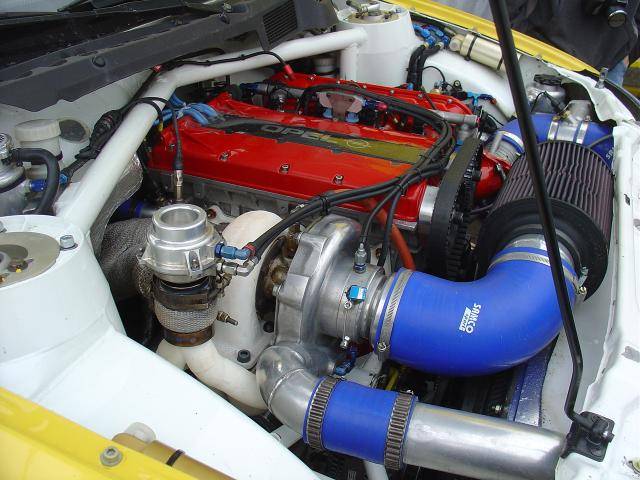
STAV-TECH
  • Home
  • About
  • Contact
  • StavTech YouTube Videos!
Opinions are like assholes, everyone's got one. But some are worth listening to more than others...

Welcome to my world, my world of turbos, tyre smoke, and tuning...

Tuning cars, driving cars, testing parts, and complaining about everything. It's my job, and a the majority of my non-work life too...

BLOW OFF (DUMP) VALVES- WHAT DO THEY REALLY DO?

9/17/2016

 
Picture
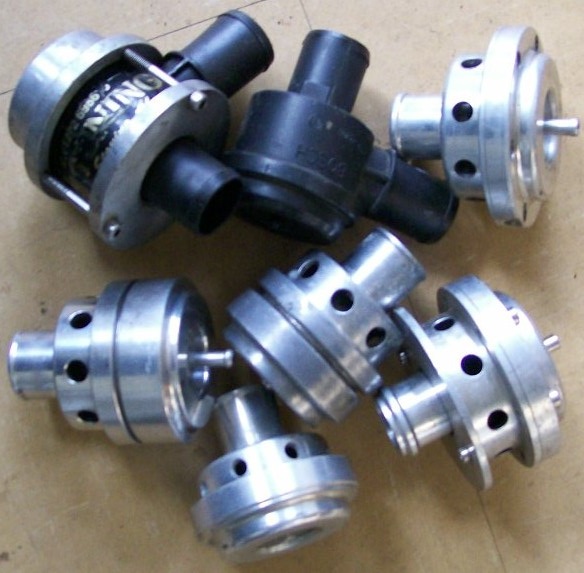
RWhen it comes to modifications of turbocharged engines, one of the first things that come to mind with a lot of people are blow off valves, or dump valves, depending what you like to call them (same thing!).
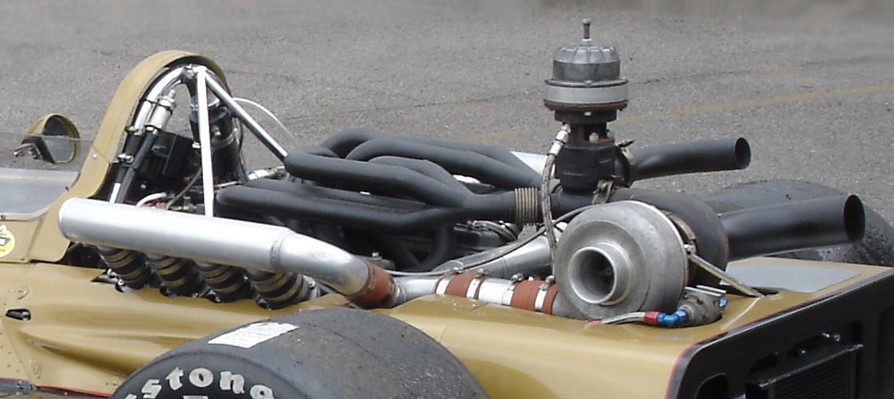
They've been around since at least the 1970s on race cars (though pretty much disappeared on turbocharged works race cars after the early/mid 90s...), factory fit parts on most turbocharged petrol engines from the mid 80s onwards, and from around the mid-90s onwards aftermarket ones became THE thing to have- It was, and to some extent still is, the first engine mod people do to a turbo car.
But what DO they do? What are they REALLY for? Well this is where the confusion/bullshit comes in, not only thanks to the internet, but thanks to the fact most the things said about them to sell them, in the past at least, were lies too.
Christ, the "Blowoff Valve" Wikipedia page even talks total and utter shit about what they do, and why, and how, and whatnot...

THINGS THAT PEOPLE SAY DUMP VALVES DO...

"Reduce turbo lag"
No. They increase it if anything. Turbo shaft speed drops far more with a BOV fitted than without. That's their true purpose, to prevent surge and overspeeding when you shut the throttle. Honestly, anyone with a turbo speed sensor will have seen this, and I've done tests with timing equipment a few times now, that shows, even if it's not noticeable seat of the pants, it makes it worse, not better. This IS fractional though, don't expect a big, or even noticeable difference on most engines- Really depends on the application.
​
"Prevent your compressor wheel from slowing/stalling (or going backwards)"
No, they actually SLOW a turbo down, that's their actual job, they're a safety thing, to prevent overspeed and surge on a closed throttle, which in some extreme situations can damage the turbo. Honestly, watch a turbo with a turbo speed sensor fitted, the RPM drops far far more with a BOV than without. The 'spinning backward' thing people say is fucking retarded btw.
It's the AIRFLOW that stalls, not the turbo, something I'll explain further down...
​
"Help prevent compressor surge"
Yep, they do this, but only off-throttle compressor surge, which isn't that damaging or sustained to turbos, as there's no load on the turbine off-throttle. It's on-throttle surge that can be hugely damaging, and it does nothing to help that. "Certain" turbo manufacturers and their badly mis-matched compressor/turbine combos are the main cause of on-throttle surge...

"Help stop turbo damage due to (whatever)"
Well yes, this is the real reason they're fitted, and can be useful for this, but their need is often hugely over-stated, and how they help prevent it is ass-backwards too. The usual bullshit myth is they help prevent turbos stalling, and the sudden slowing of the turbo is what damages them. NO. They help SLOW the turbo, as without them turbos can overspeed when the throttle is shut, and surge all over the shop, and in certain applications that can damage the turbo.

"Help MAF sensor equipped cars run right (recirc ones ONLY)"
While it's indeed true many engines with MAF sensors run like shit off-throttle if you fit a vent to atmo dump valve, the common info that you HAVE to run a recirc with a MAF is bollocks too in everything I've ever experienced.
Running no BOVs at all is absolutely fine almost always.
​It's possible there's a car where the MAF sensor does shit itself, but so far I've not found it. I've heard a whole lot of rumours, I was told by countless people without a shadow of a doubt it'd cause the 2.7TT (ie S4) Audi engine to run like shit and so on if removed, but I tried it, and it's fine- Turned out, as ever, none of these people had ever tried, just 'heard' it did.
EDIT- Now I think back, I do recall a time when it made the MAF go crazy for a second, but that was a BIG aftermarket turbo on BIG boost on a small engine, and that was the only time it happened. Generally, no issue at all.

"Makes that cool chatter noise"
I know most of you know better, but it's rare to see a video of a car with decent turbo chatter without at least one comment saying it's the BOV making that noise, or asking what BOV it is as they want one that makes that noise.
IT'S NOT! HAVING NO BOV AT ALL IS WHAT HELPS MAKES THE NOISE!
Fuck, when I was 18 (1998!) even I at first thought the same, as MAGAZINES TOLD ME SO. In fact these "expert magazines" told me that it was HKS SQV valves did that noise, and though they were about £350 back then, and I wanted that noise SO BAD I would've paid that.
In fact, after a tuned MR2 Turbo came past and chattered like fuck one day I rang Torque Developments (they were the only HKS dealer back then) to order one. THANKFULLY, the sales persons tone of voice and choice of words made me very suspicious, while also accidentally giving me some hints that helped me research what REALLY made the noise (No internet back then!), so I thankfully didn't get skanked out of £350...


THINGS DUMP VALVES DO THAT PEOPLE DON'T TALK ABOUT...

"Help suppress noise"
The main reason they're fitted to OEM vehicles is as noise suppression devices, in fact that's the exact name they're given in many official workshop manuals. The noise I mean is turbo chatter, which is a lot harder to silence with an airbox than the ptschhh of a dump valve. We might like chatter noises and induction noises, but your average Joe new car buyer doesn't. In fact back in the day I worked at a dealership and an Impreza STi we had in on a P/X that we then sold was returned to us by the customer due to "Funny noises" it was making, as it had slight chatter as it had an induction kit on it.

"Help slow the car when in limp home mode"
A lot of new cars also use a system that holds the BOV(s) open, preventing boost/power being made in case of an issue that puts the car in limp home mode. Useful as an OEM.

"Leak like bastards, causing underboosting and turbo wear"
I know they're not meant to do this, but this is a major and common issue, and often impossible to detect unless looking for it. A dump valve is another potential leak point, and split diaphragms and/or weak springs means they leak surprisingly often, especially OEM and cheapo ones, and even if your turbo is still making full boost, a leak can cause a slower boost rise, and a turbo (and therefore entire engine) working far harder.

Confused? Don't be. I'll clear your mind (a little) in this next bit...

""SO! I was always led to believe that turbos stall with no BOV, and now you're telling me turbos SPEED UP?
EXPLAIN YOURSELF!""

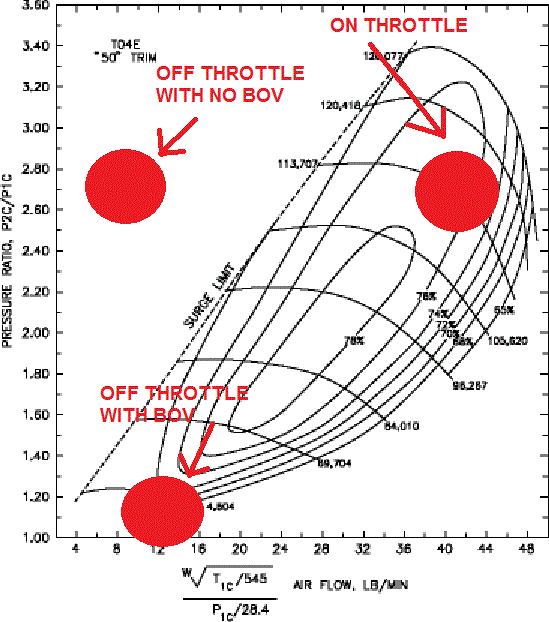
Ok, here goes. First, let me introduce you to Mr Compressor Map, with some basic annotations via the amazing medium of MS Paint...
Picture
As you may or may not know, the horisontal axis of the map is airflow in lb/min, the vertical is pressure in bar (1.00 being atmo, anything above being 'boost'), and anything within those lines drawn on the map is the 'safe' area that turbo is happy enough to run in constantly, in this case, up to about 2.4bar of boost and 49lb/min.

The three dots I've added show three different situations.

ON BOOST- 1.7bar, 42lb/min airflow, well within the map, it's loving life.

SUDDEN CLOSED THROTTLE WITH A BOV- BOV opens, so pre-throttle pressure rapidly drops to zero, while an open BOV means airflow is less but exists, and therefore the compressor drops to a very low speed point on the map. It's still safe and happy.
​
SUDDEN CLOSED THROTTLE WITH NO BOV- Throttle closes, so airflow drops to practically zero, while pre-throttle pressure momentarily spikes, putting the compressor in to somewhere on the top left of the comp map (ie lots of boost pressure, but fuck all airflow), well in the surge zone, which, if there were speed lines shown, would be a shitload of rpm too.

""OK, now I believe you about the turbo speeding up, it sounds like running with no BOV is fucking DISASTROUS and should be avoided at all costs, right?""

Picture
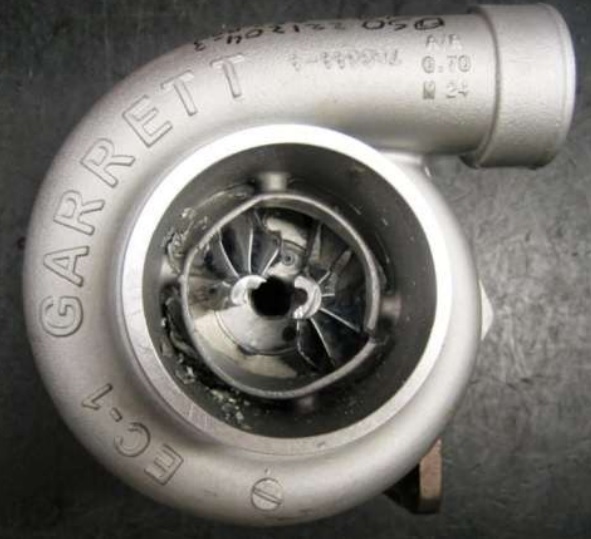
So, that'll be a dead Garrett GTX3582R. Expensive billet brokenness...
Ok, this is where the THEORY vs REALITY thing comes in to tuned cars yet again.

There is NO DOUBT the sole use of a vent to atmo BOV is to help prevent turbo damage via compressor surge and overspeed, as that deffo, deffo, does no good for performance.

In THEORY then, running one is a very wise move indeed.

But in REALITY, how many people genuinely have issues when running without one, even with big boost and hard use over long periods? Well, not fucking many at all.

The issue people seem to forget is severe surge and overspeed happens for a TINY amount of time on a turbocharged engine when you close the throttle.
It's not like a belt driven supercharger, or a gas turbine, or when surge happens ON THROTTLE. That is fucking continuous until the power is shut down, as the compressor is being FORCED to operate at that condition- THAT can be bloody disastrous in some applications as there's huge forces turning it regardless, hammering the shit out of the compressor.
But when you close the throttle on a turbo engine you are stopping power to the engine, and in turn stopping practically all power to the turbine wheel, which is what turns your compressor, so once the slight momentum from being off throttle is gone, there's no danger.

In all honesty, in my 18 odd years of messing about with turbo cars, working around and with turbo cars, testing and timing turbo cars, and reading every worthwhile turbo-related thing on the internet, I've personally seen TWO instances I think 'probably' were no-BOV related turbo fails (both on the exact same type of (uncommon) turbo with a known weak shaft, both at over 30psi), and heard of a few others on huge turbo mega boost V8 drag cars where the turbo failed at the end of the run just after they got off the throttle.

All the other times I've seen turbo fails, it's been other issues entirely. And that's thing, though a turbo CAN fail due to this, it's usually broken due to some other reason long beforehand!

On my own personal cars, even running 1.5-2bar boost for long periods on loads of cars over the years with no BOV I've had no issues, and know countless others doing the same. Christ, I've not ran one on anything since the year 2000 now I think back. And by then I'd experienced plenty of split/leaking BOVs, and have since on other cars too.

Ignoring my own experiences, and the fact I love the sound of turbo chatter, let's look at things logically...

Instances of people talking about their turbos failing that's honestly likely attributed to no BOV- VERY FEW.

Instances of people with fuck all 1st hand experience of the subject telling you to run one for whatever reason- FUCKING LOADS.

% of people with turbo fails that do run BOVs and dont run BOVs- About the same, as frankly, turbos tend to fail for various other reasons before the fraction of a second of surge and overspeed would kill it.

% of turbocharged works race cars since the early '90s that run BOVs- Very very few. Even in the 80s and early 90s they were rarely seen on a lot of applications. If they could improve the odds of ending the race, even slightly, and not cause other, much more serious, downsides, would they run them? Of course they would. Having said this, they use some good, strong, expensive, turbos on works race engines...

""So are you saying they're good or bad? I'm fucking lost here now Stav...""

Neither, there's no simple answer- I'm saying read what I've told you and make your own mind up- I'm not taking responsibility for your decisions.

For me, personally, no, I never run one. Ran tons of cars at mega boost, hard used, all kinds of turbos, for years, never and issue. Loads of mates do the same, even on fancy big bucks ball bearing turbos, no issue. 
My old R32 Skyline I built, what, 4+ years ago? 1.5bar+ boost, 470bhp, from a journal bearing Holset-based turbo I bought from Compressor Racing (their RS341 model- Like a slightly improved HY35). No dump valve fitted of course, used hard as fuck by me, and hard as fuck by the owners since, track use, drift use, top speed, all sorts- Turbo is still going strong.

Does this make it gospel though? No.

Would I still not run one if I happened to own a turbo with a KNOWN issue of shaft snapping or wheels exploding with not running one? No, I'm not fucking stupid.

Would I risk not running one on some crazy expensive turbo I couldn't afford to fix? No, as I'd not buy one in the first place. Should you? Well, read the above, do your own research, and make your own choice...

Remember though- Only listen to people with NO motive either way (ie they don't sell turbos or BOVs), only listen to people with proven experience on the matter, and remember, someone saying "Well I've got a BOV and my turbo hasn't ever broken" is like me saying I've got a magic stone that protects me from Gorillas and that's why I was never attacked by Harambe...

Stav

REAR MOUNT TURBOS- PERFECTLY GOOD IF DONE RIGHT.  IF...!

9/14/2016

 
Picture
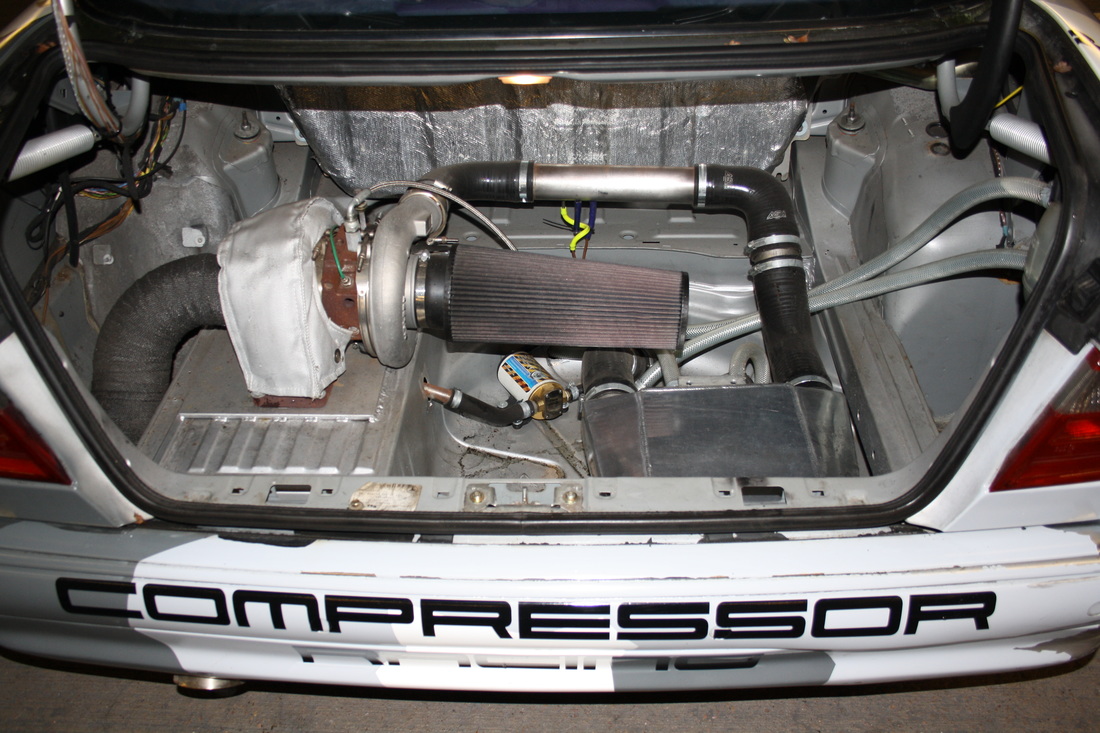
The old Compressor Racing E55 AMG Turbo. Probably the UKs best known rear mount turbo car- A car I helped build and develop with great success.
Rear mount turbos are pretty new to the tuning scene as 'tuning' goes, having only becoming well known in the last decade or so, and even now are relatively unheard of in the UK. Therefore almost every time they're spotted they're always treated with amazement, both in good and bad ways...
​
The problem is, people's opinions of them tend to be polar opposites of each other.

MOST people, due to it being totally against everything they know, instantly say it will be laggy as fuck, won't spool, will be shit, and so on and so forth.
They're wrong if it's done right.

On the other hand, you got people, again have no actual experience of it, but love the idea and have seen a few on the internet, who tell you rear mounts are amazing, the best way to turbo, as good as a front mount, and so on.
They're also wrong.
Picture
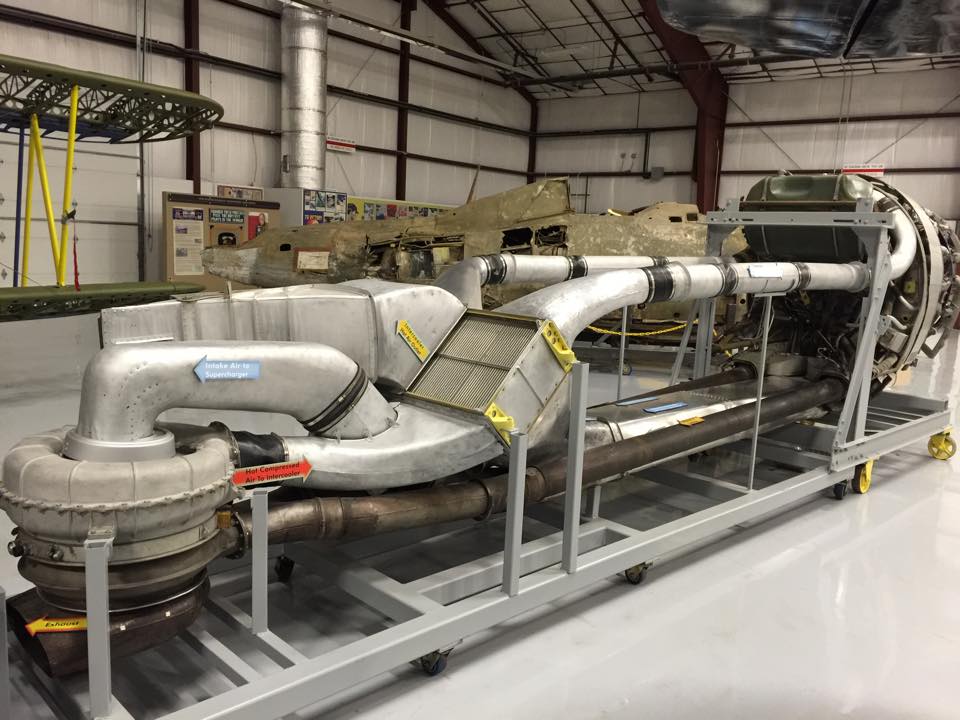
A rear mount turbo setup from World War Two! This is a P47 Thunderbolt engine, turbo, and intercooler setup! Engine at the front, wastegates at the front too, turbo far left, near the tail.
Basically, rear mounts are neither shit or amazing, though they're perfectly possible to be shit if done incorrectly, just like a front mount turbo can be. What they are is simply another option if a front mount isn't viable for some reason, and done right can work fantastically well, often far better than most front mount setups, which are often sub-optimal, even when a 'pro' has designed them...

If ALL ELSE WAS EQUAL, a front mounted turbocharger IS BETTER, no iff's or but's, it is. But things never are equal with turbocharging, and there's a multitude of reasons a rear mount setup is useful in some applications, and if done right, they can perform as good or better than a typical front mount setup.

The E55 AMG rear mount I helped build for Compressor Racing was a perfect example of the above. Just like a whole lot of cars, there's next to no room in the bay for a turbo or two, so even IF it's possible, you'll likely be spending a few grand on custom manifolds, even before anything else. And then you've still got to find room for the intercooler, and then deal with the heat management issues for all of that too.
The only other option for the E55 is a supercharger conversion, that costs at least £7000 plus fitting, and makes about 500bhp at 9psi boost, about the limit of the stock (albeit modified) ECU, as we found ourselves.
The E55 rear mount turbo we built was on full boost by 3000rpm (despite a turbo capable of 1000bhp!), and the only time we put it on the dyno it made 465lb/ft at just 4.5psi and due to boost control issues we were only at 2psi by peak power but it still made 440bhp- About 90bhp more than standard.
In the end we sorted out the fuel and boost control issues and got it safely at 9psi. It was never dyno'd at this level, but it WAS timed with Racelogic timing equipment, the proper pro stuff magazines and companies use, not some crappy app or a stopwatch, and the results, despite horrendous wheelspin, were pretty impressive to say the least...
60-100mph time was 4.4seconds at best (backed up by a number of 4.5s runs).
To put that in to perspective, the later, best part of 500bhp, factory supercharged version of the E55 AMG does 60-100mph in 5.5seconds, over a second slower, and even a supercar like the Ferrari F360 is 4.6sec!
And it even made a pretty fun drift car, despite being a huge, heavy, rusty old boat, as these pics show...
And how much did the full rear mount conversion on the E55 cost to do, inc all the non-turbo related bits, such as the uprated fueling parts and so on? Under £2500. 
You'd not even get a pair of custom manifolds made for a front mounted turbo setup on the same car made for that, and even if you did, will be spool a 1000bhp capable turbo much sooner than 3000rpm? Would you even want it to? Probably not for both accounts, and it'd be highly unlikely to make much more power at the same boost either.

While it's MOSTLY pure lack of room that makes a rear mount particularly tempting, it's also been done, even with very high end race cars, for weight distribution reasons, and the simple fact that, done right, it isn't a big disadvantage...
So does this mean we should ALL have rear mount turbo cars? FUCK NO! If you've the room to easily do a front mount turbo setup that's not a complete fucking bodge or cost an absolute fortune, you may as well just do that. As said already, if all things are equal, it will spool faster and make more power than a rear mount. It might not spool loads faster and make loads more power, but still, really no point for a rear mount unless it makes things a lot easier for whatever reason.

BUT as it often does make life easier, I'm sure most are you are thinking "Ok, but say if I do want to go rear mount, how the FUCK do I do it so it's not the laggy mess the naysayers say? How DO I make it as close to as good as a front mount as possible?"
Well, I better tell you what I know and have experienced...

MANIFOLDS- Use standard cast log ones, or short runner tubular ones at very most. For fastest spool you want to minimise exhaust length and maximise heat retention, and regardless of turbo position, long runner exhaust manifolds have very little effect on peak power on turbo cars anyhow.

PRE-TURBO EXHAUST DIAMETER- This is one so many people get massively wrong, and hugely over-do. Treat all your pre-turbo exhaust like you would your manifold on a front mount system, so with a T3 flange and even 600bhp+ a single 2.5in pipe is more than enough, and a single 2in or 2.25in is plenty for lesser power cars. Even with big V8s running over 140mph in the quarter mile, a single 2.5in pipe leading to a T4 flange turbo is well proven. Overly big exhaust diameter will drastically slow spool, and is the biggest killer of performance on rear mount setups.

PRE-TURBO EXHAUST LENGTH- To minimise heat loss, shorter is better, so if you can actually have a mid-mount turbo rather than rear, even better. Just behind the front seats? Instead of passenger seat? It's all been done...

PRE-TURBO CATS- I've not experienced this one first hand, but while basic theory says they'd be bad for power and spool, they're fitted to a great number of very powerful but emissions legal rear mount cars. It's possible the reason they're not the spool killer you might imagine is because post-cat exhaust temp is incredibly high (it's part of their job), which will help maximise exhaust energy and heat at the turbine. But I've never tested this so that's speculation...

BOOST PIPE LENGTH- As discussed in THIS feature, boost pipe length isn't actually a big deal at all. Don't make it longer than it needs to be, but of all the things to fuck up spool on a rear mount, this is a minor one.
One thing you might want to take in to account, though on smaller engine applications (or just using bigger boost pipes) it's likely not an issue, is the instant off-boost punch at very low rpm or just as you open the throttle. On small capacity cars there's not a lot unless there's boost anyhow, but on the AMG it had a huge V8, and once it was rear mount turbo, sucking through inlet pipes 10 times as long but about half the diameter of standard, it lost a little of this punch. You'd not notice unless you drove it back to back, and even then I only really noticed as I wanted maximum punch for drifting, but it was there.
I had a solution though, I fitted this flapper valve taken from a Volvo boat engine, allowing the engine an alternative way to breath in N/A mode...
Picture
INTERCOOLING- Yes, compressor outlet temp is lower in a rear mount. Yes, the long boost piping allows for more heat loss. But regardless, the inlet temps aren't that much lower, so if you've got room at all, you'd be mad not to fit an intercooler or chargecooler.

POST TURBO EXHAUST- As explained in THIS feature, bigger is better, and with rear mounts needing all the help they can get, as big, and as short, a post turbine exhaust, the better. Even with a 2.5in pre-turbo exhaust, noticeably faster spool has been achieved by going from a 3in to 4in post-turbo exhaust. As a rule of thumb, your exhaust diameter should be AT LEAST 1.5 times your turbine wheel exducer diameter for best spool...

HEAT RETENTION- This is a big part of spool for any turbo, and a HUGE issue on rear mounts. Basically, the hotter the exhaust gas is by the time it gets to the turbo, the better your spool is. So heat wrap ALL of the exhaust, front to rear, double layered if you can, and of course, put a turbine blanket around the turbo too. The difference between heat wrapped and not is very noticeable.

TURBO POSITION- Under the car is most common, and nothing wrong with that at all, as long as ground clearance isn't an issue. On the Merc we went boot mounted, which personally I prefer for packaging reasons. When we did so we got no fucking end of people saying how can it breath in there, we need to cut holes to let air in, etc etc etc.
Nah, not really.
Boots are FAR from air tight, thousands of small holes and gaps which overall make up to far bigger than a typical 3-4in inlet of an airbox, and the boot itself works as a giant airbox.
No matter how many times we said this, people still said it, so in the end we drilled some holes in the boot to see if it made any difference at all.
Nope, not a fucking sausage, exactly as expected.

​WASTEGATE POSITION- The "Normal" rear mount position is right by the turbine inlet, but IMO they've decided that with zero testing and just their guess. IMO it's wrong. For me, the closer to the engine the better. The WW2 planes and the top drag cars have the wastegates just after the manifold collector. And I'd be more inclined to listen to war winning aircraft and cars that run 190mph in the quarter than some random other person who's probably not tested either way.

OIL FEED AND RETURN- While you certainly can have a stand-alone oil system for a rear mount turbo, it seemed like added complication for little benefit to me, so on the ones I've had dealings with, we've always just fed the engine oil the traditional way- An oil feed pipe direct from the engine.
Oil return is a bit different though. You NEED an electric scavenge pump so suck and pump the oil back to the engine, it won't go on it's own, you'll just end up with a smokey fucked mess. One bonus is, you don't have to return to the sump like on a conventional gravity oil return, anywhere will do- On the E55 we returned to one of the cam covers! 

TURBO SPEC- This is the biggie. Compressor side, well, it should be the same as you'd choose front mounted for the power you want. Turbine, well, smaller improves spool, but also increases backpressure which kills power, and personally I'd not be going much smaller than I would front mounted, maybe not any, and just concentrate on optimising the setup as per above. Just be conservative on turbine size, sensible, as you can't get away with overkill as easy as front, but the exhaust gas still needs to come out, and having a tiny turbine to try and get good spool is why so many rear mounts make shit power for their boost level.
Of course, there's OTHER options to allow a massive turbo without the risk of killing spool.
On the E55 AMG we did for Compressor Racing we used a variable geometry turbine turbo, a Holset HX55V VGT unit in fact, a flippin' huge 1000bhp capable beast. VGT turbos, while not the magic solution to all our woes, have the ability to spool like a small turbine, and flow like a large turbine, so are very useful for rear mounts.
The issue is big VGT turbos are rare as hell in the UK in good condition, and the poxy little ones used on diesel cars are useless, so it's not an easy solution.
Another idea is twin rear mount turbos, compound style, one small for spool, one big for power. I'm currently building a rear mount setup like this now.
Finally, and one I've never seen tested, but I'd like to try one day, is the effectiveness of twin scroll. I don't think it will be a magic solution, but for cars with a very easily done twin scroll setup, mostly inline sixes and twin rotors, I'd be inclined to run two small pipes to the turbo, one to each scroll...

AND THAT'S THE BASICS FOR YOU...
There's a whole lot of bullshit, incorrect 'facts', guesses, and downright lies about rear mounts, but hopefully what I've told you will set a few things straight, and to be honest is plenty enough, if you choose to follow my advice, for a pretty well performing rear mount setup.
BUT DON'T FORGET! Don't do it if there's no good reason to...

OH! Forgot to mention something that's actually a BIG plus point, as childish as it may be... IT SOUNDS FUCKING MENTAL. All you can hear is turbo spooling up and down, super loud chatter and spool and everything else. Sounds like your car has a jet engine rather than a normal engine, which is amusing. Click HERE to see a short vid of the AMG, inside and out, to see what I mean...

​And of course, it looks cool too...

ZURAWSKI MOTORSPORT- A RARITY IN THE UK TUNING WORLD...

9/10/2016

 
I've known Thomas Zurawski for years, right from when he operated from a tiny little workshop in central Gloucester, in fact we now live 5min down the road from each other, but he has nooo fucking idea I'm writing this (TBF I only decided it'd be an interesting feature earlier today), so this will be a surprise to him to say the least.
One thing's for sure, I'm glad I know him, in fact I think all of his customers are, as he's the type of tuner I think we all expect/hope tuners to be in our heads, but in fact are rare, and that's someone who can basically create pretty much anything you can dream up.
No matter how unusual or one-off, he finds a way to do it.

I've worked with and for tuners constantly for the last 15 years, and I've seen it all. From amazing unsung geniuses, to appallingly bad and shouldn't be in business. From basic hot hatches to Formula 1 and WRC cars. From backyard tuners to enormous warehouse sized places.
Ignoring the bad and even the average tuners, and just talking about the great ones (I'll try and talk about some of them in future features), they generally do whatever they specialise in brilliantly, but most, totally understandably, stick to what they know, stay well within their comfort zone, and just do what they do best. If any requests come in for something very different, it's generally either discouraged/refused, or will be hugely expensive as any work they don't specialise in will be farmed out elsewhere.

When it comes to custom fabrication it's a similar situation too, as I know a lot of absolutely incredible fabricators, some of which would make a good feature on here too actually, but again, wisely enough, they stick to what they know best.

Because of the above, I've found over the years, and no doubt most of you have too, getting custom work made, unless you're very rich or can do it yourself, is very, very tricky.

But this is where Zurawski Motorsport is different, as Thomas is genuinely the only person I've ever met who I can go to with strange/crazy/one-off tuning ideas, and not only does he always say "Sure, we can do that", but he's not bullshitting either. He not only has the fabrication skills, but he genuinely understands tuning too, so what you have in mind, what you hope for, is what the end result actually is.

I first used him when he was fairly unknown, 6-7 years ago, to weld a few things for me. It was simple stuff, but I heard he was a shit hot welder, and was local, so it was ideal. From these basic jobs and talking to him, it became clear he knew what he was doing with tuning as well as fabricating, and as I had an idea in mind, and couldn't previously find anyone who'd do it, I went to him with a couple of bits of metal and what seemed to me like a good idea, and the rest is history.
What I wanted, but didn't exist, was a super short runner twin scroll turbo manifold for a 13B rotary engine. All manifolds available then were longer runner than I wanted, single scroll, or both, and was told what I wanted didn't exist as it wasn't possible.
I explained what I wanted and why, and within a few days he calls me and says it's done...
As time's gone on, Zurawski Motorsport has moved to a much bigger premesis in Ledbury, and the main things he now does are almost 'production' parts rather than 1-offs, albeit ones that didn't exist (or indeed were called impossible) until he designed them, such as the Toyota 1UZ V8 engine and manual gearbox conversion parts for 3-Series BMWs, big power twin scroll turbo setups for RHD inline 6 BMWs, and 1UZ V8 big single turbo conversions, all of which he sells to customers all over the world...
But why Thomas, and Zurawski Motorsport in general, has ended up with the large following and the respect they have, is because everything the company has done originally comes from an individual customers crazy idea/dream, and while others say they can't do it or expect horrendous money to do so, it's always the same "Sure, no problem" from them, and the result is mad shit like this...
Mid-engine SR20 Time Attack Silvia? 
​"Sure, no problem"
No, forget the SR20, fit a 1UZ Toyota V8 and a flippin' massive turbo in the same place.
​"Sure, no problem"
Picture
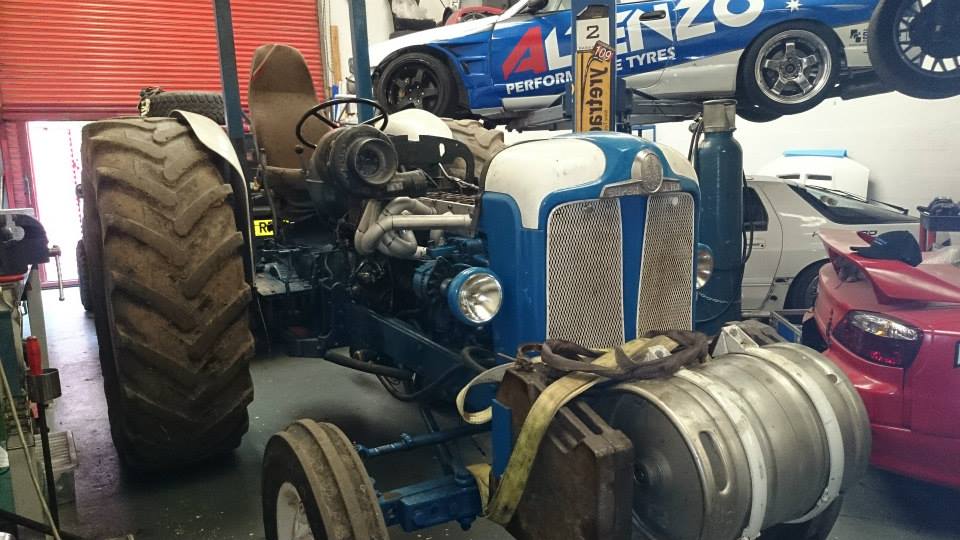
Twin scroll tubular manifold on a tractor with a massive Holset turbo?
​"Sure, no problem"
What about a BMW V8, in an E30, with twin turbos, massive intercooler, and a WRC style direct port anti-lag system?
"Sure, no problem"
Why not build a completely custom bike, and I mean REALLY fucking custom, even make the bloody frame and wheels yourself?
"Sure, no problem"
How about build a twin turbo setup with ITBs and insane custom plenum for some crazy off-road lightweight race truck?
​"Sure, no problem"
Make a WRC/Rallycross style twin plenum equal flow intake for an RB20 and help it produce 470bhp (on stock head/cams) that has full boost by just 4000rpm (despite a 600bhp rated single scroll turbo!) that's still going strong after many years of hard use?
"Sure, no problem"
Massive single turbo setup for an E34 BMW 540i?
"Sure, no problem"
E36 BMW with a 1UZ V8 engine, massive turbo, and WRC anti-lag setup?
​"Sure, no problem"

OK, OK, we get it, they can build some mental looking stuff...

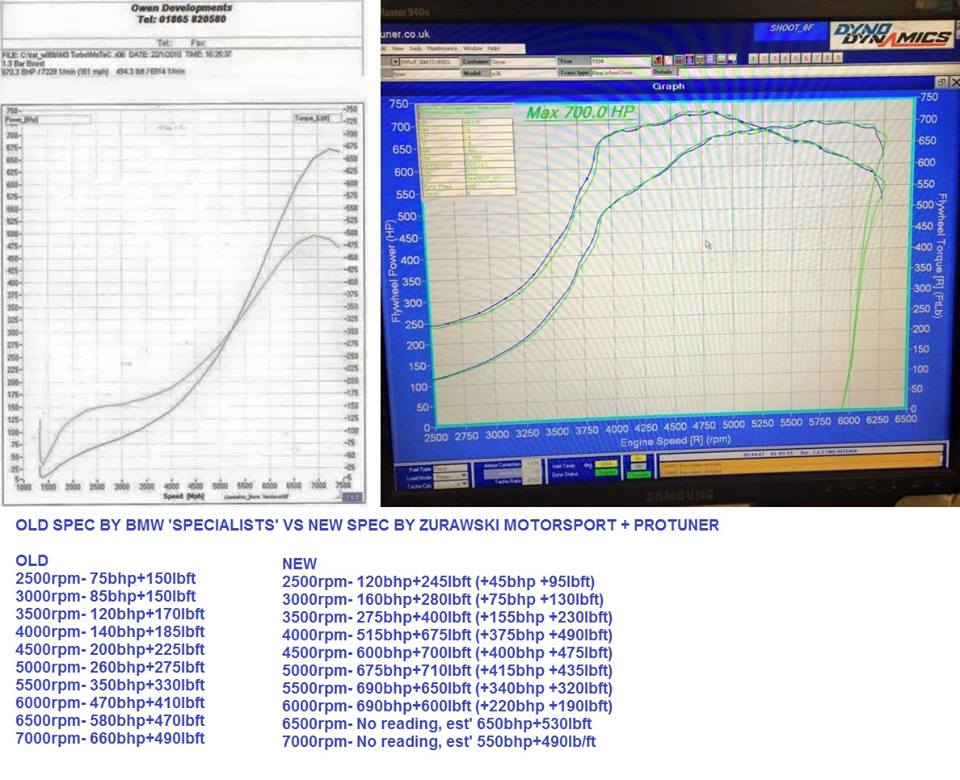
But these things don't just look mental, the ARE mental. A big thing I like about Zurawski Motorsport, and why I've used them for so many of my stupid projects and ideas, is Thomas REALLY gets tuning, and works things out properly via a mix of sound tuning principles and his own experience. Steve Will's awesome E36 M3 turbo is a good example of this. It already was a 700bhp turbo monster with a fully forged engine, but he went to Zurawski Motorsport not looking for more power, but similar power but with a much improved powerband.
So off came the log manifold 99% of RHD turbo BMWs use, off came the stock inlet plenum, and what was fitted instead was the Zurawski twin scroll manifold and twin plenum equal flow inlet manifold, a setup Zurawski Motorsport now has available to any customer who requires it.
And, well, the difference in how the car performs, despite the same size turbo and not a single change to the engine internals, is nothing but incredible, as the dyno comparison below shows...
Picture
A big big reason why his stuff works is, unlike many (though they'd never admit it), he really does calculate and measure everything rather than make a best guess, and it's actually quite odd/bizarre when you see him do it, especially for someone like me that sucks at maths, as he does it mostly with a pencil and paper, like so...
It's also worth mentioning his shit is STRONG too! Unlike so many exhaust manifolds which crack all the time, his stuff is made from thick, and top quality, stainless steel, and welded not to look pretty in internet pics (though it does), but to be fucking bulletproof, even with hard anti-lag use and so on.
​To the extent customers have had quite big crashes in their cars that bent chassis rails and so on, but did the manifold crack? Nope.
Picture
So yeah, it's not a big flashy company, but what Zurawski Motorsport does it pretty unlike anyone else I've found in all my years of pissing about with cars in the UK, and while I'm not easily impressed (there's only a handful of other tuners I can think of off the top of my head I'd like to write about), anyone who can so consistently produce such mental stuff as him, without the kind of WRC-style budgets and huge staff levels this kind of craziness normally comes from, gets my vote...

To see more, check out the Zurawski Motorsport Facebook page HERE, and there's a website HERE too.

COMPRESSOR HOUSING A/R- IT DOESN'T REALLY MATTER...

9/8/2016

 
Picture
This might be obvious to most of you, but it's a very common mistake a lot of people make, and actually leads on to some interesting points others might not realise either, so this is worth a little feature...

While turbine housing size is hugely important, and plays a key part in how a turbo performs, on almost all turbochargers, compressor housing A/R isn't a performance issue at all, so don't worry about it, and stop quoting it, please.

The reason I'm writing this is because it's very common for people who aren't exactly turbo experts, especially when someone asks them what A/R the turbine housing is, or when they're listing one for sale, to quote the compressor housing A/R instead. The reason they do so is pretty understandable, as it's usually pretty noticeable on the front of the compressor housing, so it's much easier to spot than on the turbine, especially when still fitted to an engine.

While it's easy to spot, in 99% of applications it doesn't mean anything, and will be near as damnit optimal from the factory, and with no other options available anyhow.
For this reason, it's only really Garrett and BorgWarner who ever even print it on the housings- It's never mentioned on Holsets etc as they're all damn big and therefore pretty much perfect, and because of this there's no other options regardless.

Having said the above, and maybe it's a coincidence, but the only manufacturers where occasionally a larger compressor housing can benefit some turbos, especially when they're pushed hard, is Garrett and BorgWarner. 
On Garretts the ones that benefit are things like the GT28RS, GT2871R, and even GT30R, that have optional smaller 'compact' compressor housings available, which make them direct replacement turbos on things like SR20DETs etc. These smaller compressor housings aren't the optimal ones for flow, but they serve a purpose to make larger than normal turbos fit in the stock space, so it's a compromise you may have to make in some applications.
On BorgWarners, some S200s, S300s, and S400s it's an option sometimes too. Thanks to the HUGE amount of OEM engines they're fitted to, Borgs often have a variety of compressor housing sizes fitted to what's essentially the same size turbo, and the bigger ones generally perform better than the smaller ones.
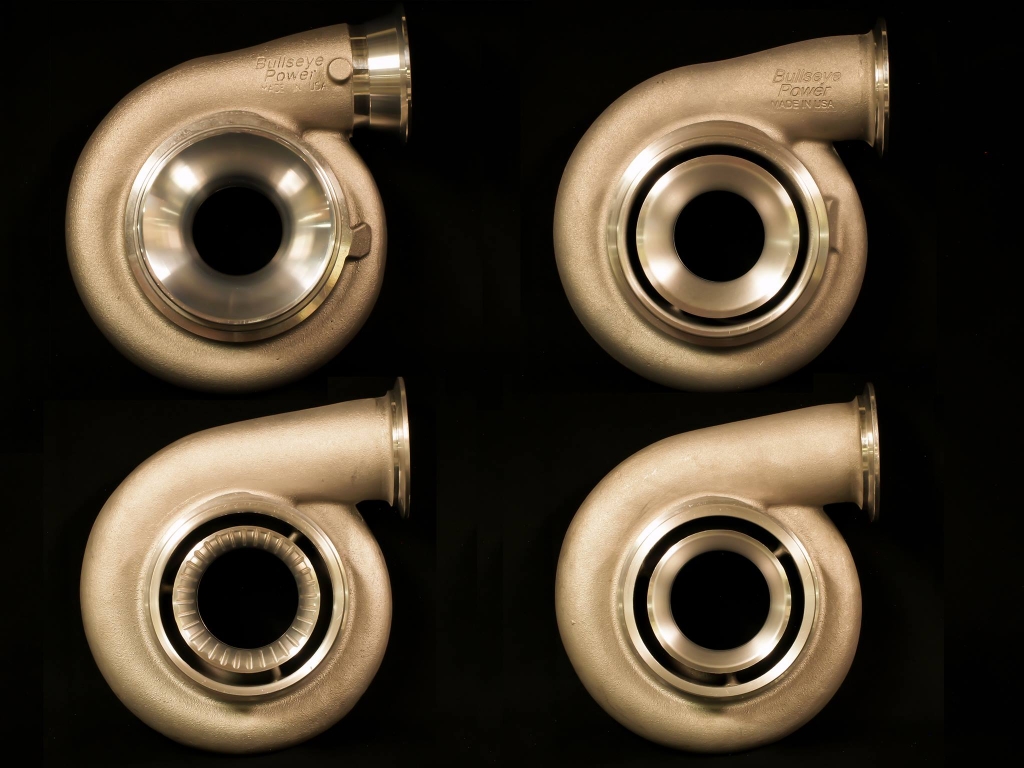
With Borgs it's become such a big thing that these bigger, higher flowing compressor housings have become known as "RACE COVERS", as they're proven to perform significantly better, despite the fact they're mostly the OEM parts from JOHN DEERE turbos; yes, tractors and so on! Of course, "RACE COVER" sounds sexier and sells more parts than "TRACTOR COVER", despite the fact most modern John Deere engines have some of the best turbos in the world fitted to them as standard.

Better compressor housings for Borgs have actually become big enough business that true aftermarket ones exist too, and they're not cheap, but they look cool...
Picture

THEORY VS REALITY- LONG BOOST PIPES DON'T INCREASE LAG!

9/7/2016

 
This is the never ending myth that comes up almost every time someone asks about fitting big intercoolers on forums and so on. You can be assured a knowitall, who no doubt has zero experience of it or he'd not say it in the first place, will tell you long boost pipes and/or massive intercoolers will make your car laggy, especially if you have a small turbo.

Well, let me say, that's TOTAL BOLLOCKS.

In THEORY, and it is fucking basic, primary school, narrow minded, short sighted, theory, the longer the boost pipes, and the bigger the intercooler, the longer it takes the 'boost' to travel from the turbo to the engine, and the longer it takes the 'boost' to pressurise it all before it pressurised the engine.

In REALITY, airflow out the turbo travels at fucking HUNDREDS of miles per hour, and airflow in to the engine consists of HUNDREDS of litres per fucking second, so how in God's name do you really think adding even 10ft and 10litres (and that's massively unlikely) to the pre-throttle intake length/volume will make a car laggy is beyond me.

In reality, and I've tried it over the years with really bloody extreme examples, with poxy little turbos and ridiculously big intercoolers and pipe lengths, it never ever feels 'laggier' or 'less responsive' or 'slower boosting' or any other way people want to say it, and usually (Imprezas are a great example as they have insanely long intercooler pipe lengths and massive front mounts) they actually are noticeably MORE responsive and have MORE low down power than before, as low intake temps are far more effective for performance increases than any theoretical response improvements.

Almost all top mount setups, and most v-mount setups too, usually have pretty horrendous inlet temps compared to a decent front mount, and with no real response improvements, giving up lower inlet temps just to shorten boost piping is a terrible plan in reality, which brings me neatly on to this car...
What we have here is an MR2, with a mid mounted 2ltr (2.1 maybe, can't remember and it doesn't matter) 4cyl engine. But the turbo is REAR mounted, a good couple of feet from the engine. That alone is enough to make Pistonheads forum nobheads cry 'LAAAAAAG' in some dweeby middle class voice. BUT hang on, where's the intercooler? Well, it's at the FRONT! Yes, this mid engine car, with a rear mount turbo, has a front mounted intercooler, and at least twenty foot of boost pipes connecting it all up!
Seriously, I've literally NO doubt if this car was created by some random lad in this day and age, not only would it get fucking slaughtered on whatever forum he made the mistake of posting it on, but it'd end up going viral on Facebook etc etc as the hordes of internet 'experts' ripped the absolute shit out of it for being a ridiculous stupid idea, despite none of them having any experience at all with anything even close to it.
I can picture the unfunny memes about it now...

I'm sure, even now, even after everything I've wrote, a lot of people are looking at the pics above and thinking "Fuck me, that must be horribly laggy and useless".
Well, no, no it's not, in fact the above car won the GT300 JGTC (Ie Japanese Touring/GT championship) in 1999, vs RX7s, S15 Silvias, Porsche 911s, Imprezas, and more. 
I'm not 100% as I've not found enough detail to be sure, but the same setup in different livery might have won the 1998 championship too (MR2s with the same drivers did), and I think the 2002 GT300 winning MR-S (below) looks like it might've been a similar setup too, but can't find enough pics to be 100% sure...

COMPRESSOR MAPS- NOT AS IMPORTANT AS MANy THINK...

9/5/2016

 
The title says it all really, and that's not opinion, that's cold, hard, fact. 

They're not useless, in fact they're a handy guide if you have them, but the only tell a tiny part of the story when it comes to how useful a turbo is. For this reason, basing your turbo choice on what you see on a compressor map is ridiculous, and just shows that you, despite no doubt feeling smug that you understand how to read a compressor map, also shows you don't really know how engine tuning works...

I've actually seen a whoooole lot of people choose not to buy a turbo because there's no compressor map publicly available (or just doesn't exist). And considering pretty much no aftermarket turbo has a map available, and not even all OEMs publish theirs, this is pretty ridiculous.
The fact that the vast majority of the fastest and most powerful tuned turbo engines on this planet runs turbos with no compressor maps available for them is a hint at how "Think they're clever but in fact are stupid" (what's a good term for that, barring dickhead?) so many people are.

So what are compressor maps good for? Well, lots of things. They tell you the maximum (roughly, it's not gospel, most can do a bit more) airflow of a compressor. They tell you the maximum (roughly again, most can do more) pressure they can achieve. They also show you what sort of pressure and boost they're most efficient at, though if you're aiming for the most efficient point you'll be giving up both spool and power compared to a different spec turbo, which is a bit daft.

As the above sounds useful, why am I saying they're not that important? Well, while it's not as accurate as a compressor map, compressor wheel inducer and exducer sizes are a fairly good indicator of these things too. How much a compressor will flow is indicated by how big the inducer diameter is, and how much pressure it's happy to push is generally indicated by a bigger exducer diameter compared to inducer.
The another big reason you can't rely on them is because, as mentioned, the vast majority of the worlds best turbos simply don't have compressor maps available (Only some Garrett, some BorgWarner, and very very few from others), so you'd be likely hugely missing out on the best turbo for you if you went purely by maps.
Also, and this is a biggie, thanks to the wonders of the internet, plus the experts who create and sell these turbos, you're hugely unlikely to be venturing in to uncharted waters by using a turbo, and a bit of research can almost always find out how much they flow, how much boost they can produce, even without seeing any hint of a compressor map.

And this brings me on to the main reason Compressor maps aren't that important- ALL they show is the compressor side, HALF the turbo, and on most applications the less important side...

Compressor maps don't show, in any way, shape, or form, the number one question for 99% of people- How a turbo SPOOLS. Not only that, but it also doesn't show if the turbine side is far too small for the application; something that's often ignored, but is a HUGE factor on reliability and power.
An overly big turbine side won't spool well, or indeed at all- Compressor size has very little effect on spool.
An overly small turbine side not only can restrict power and usable rpm, but high-pre turbine backpressure causes huge reliability issues that wouldn't happen with a correctly sized turbine- What goes in has to come out! Check out my earlier feature HERE regarding backpressure for more info on this...

So to sum up...
Compressor maps = Useful yes, but vital, hell no.
Choosing a turbo via a compressor map = Stupid, as ignores all the main factors.

If your turbo doesn't work as well as it does for others, you need to face facts,  it's probably your fault...

9/1/2016

 
Turbos are amazing things, they're a big reason the vast majority of the worlds fastest cars in almost every discipline are as good as they are, and for us tuning obsessed idiots it means we can go a whole shitload fastest for our money than we could if they didn't exist.
BUT, and this is something a lot of people either underestimate or seem to be totally oblivious to- They're not fucking magic! You can't just throw a turbo at a pile of crap and expect it to work as well as proven results elsewhere, you need to do things properly...

Some people are just plain stupid, and I mean the ones who wonder why they've not instantly got the same 800bhp another engine with the same turbo has, despite the other engine being of a totally different spec, running twice the boost pressure as them, or not even being the same fucking engine. But forgetting people who shouldn't be allowed near a turbo in the first place, it's the smaller, but almost as drastically important changes, that most seem to miss. There are literally hundreds, but this is some of the most common...

PORT MATCHING- Christ, the amount of people I see who copy someone elses turbo and manifold spec, spend well over a grand on some fancy 8Boost/Part-Race tubular job, but just slap them together and think that's going to work great is unreal.
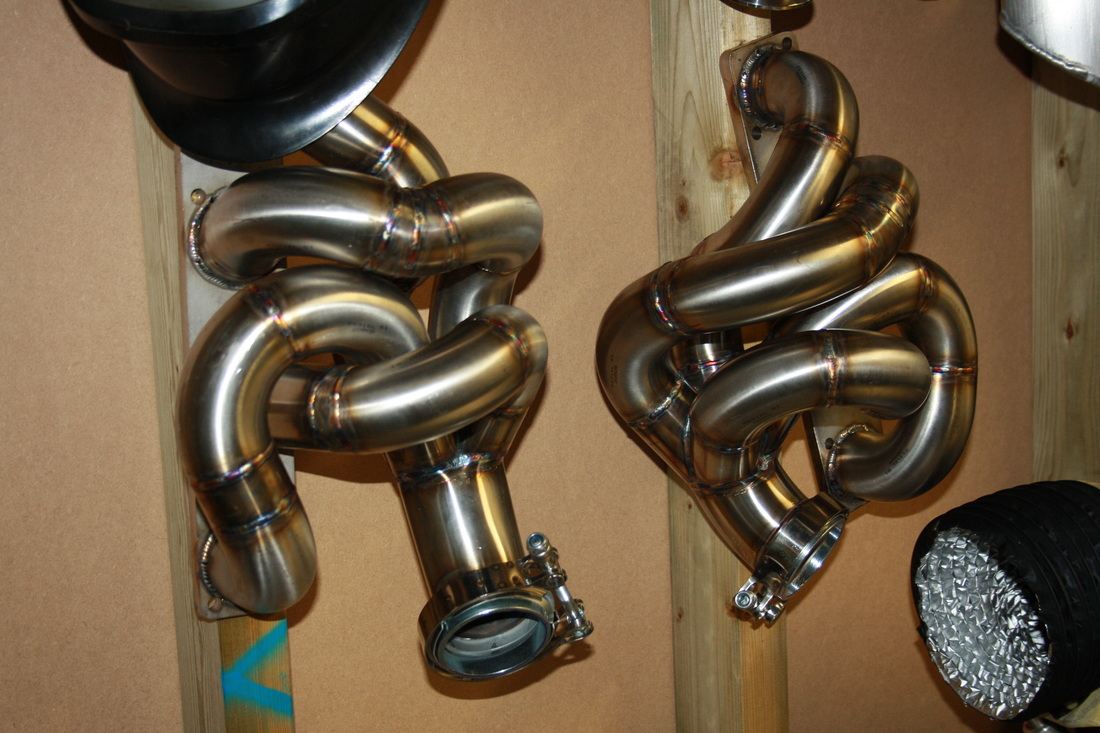
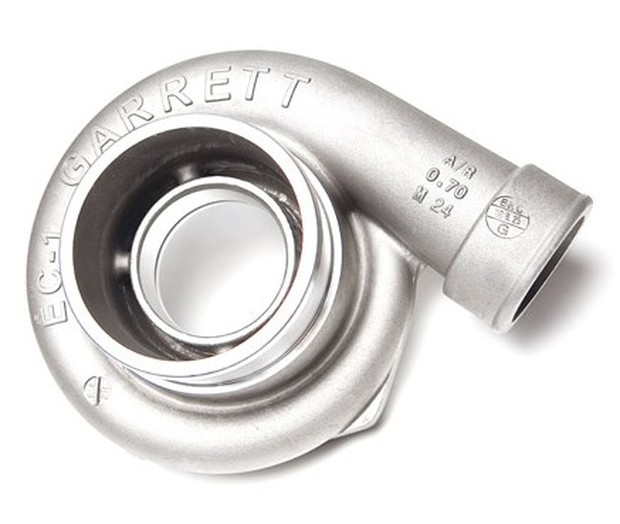
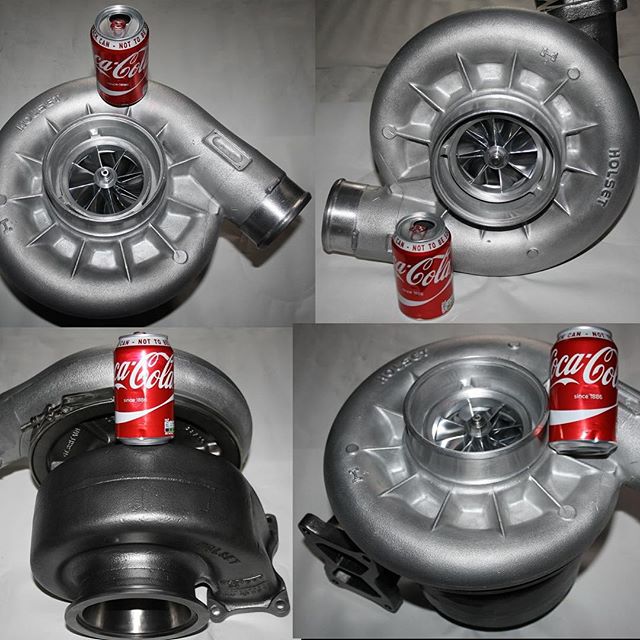
Look at the pics at the top of the page- Just because something has a T2/T3/T4 bolt pattern flange DOES NOT mean the port sizes are the same, in fact they're almost always far, FAR smaller than the manifold ones. And that flippin' massive flat step between the manifold and turbine is a killer for flow, and a good way of buggering up how fast your turbo spools, and if you're anywhere near it's limit, even what peak power is coming out of it.
A lot of BorgWarner 'T4' flange turbos have typical T3 sized ports, so the step is huge, and to be honest even most T3s, especially things like twin scroll Holset ones, the ports are far smaller. It's an OEM thing too, look at the top middle pic, that's a Skyline GT-R turbo, R32, R33, and R34 ones are all like that- T2 flange, but the port only goes 2/3 the way along compared to a typical manifold/gasket, leaving a 5cm by 1cm flat plate for the exhaust gasses to smash in to, causing all kinds of flow destroying turbulence.
Do what do you do? Well, you port match it. You don't have to be an engineering genius, it doesn't need to be perfect, and you certainly don't need to open up the entire port, but if you can use a Dremel, die grinder, even some files, and turn these big flat edges in to smooth transitions from the manifold port size to the turbine port size, you can drastically improve flow and performance.

TWIN SCROLL TURBOS-
Fair play, twin scroll turbo setups can be damn good. A good example of how good they are is a little 2ltr engine with a big Holset HX35 12cm on it. Even using the standard Cosworth YB 2wd exhaust manifold (that big cast iron rusty thing centre bottom of the pics above), which is twin scroll, a HX35 12cm (a big, journal bearing, cast wheel, 600bhp+ proven turbo, not exactly a new design either) is well proven to hit 25psi boost by just 3500rpm. Same results on Mitsubishi 4G63s with twin scroll setups.
Awesome when you consider a single scroll setup with a similar size turbo, even fancy BB core ones with £1500+ price tags, tend to not hit full howl until upwards of 5000rpm- That's a whole different world of drivability.

The thing is, twin scroll manifolds are expensive and relatively uncommon, so a lot of people can't run them, certainly not as easily as they can find badass twin scroll turbos. That's not the end of the world, as while a lot of people ask me if it's possible, I can assure you you can 100% run a twin scroll turbo on a single scroll manifold. Of course it won't spool like a twin scroll setup, but done right it's as good as the single scroll version, so yeah, go for it- Thousands of people do with huge success.

BUT, just like the port matching mentioned earlier, the divider on the turbine inlet flange is a big ol' turbulance creating flat plate when ran on a single scroll manifold- So again, smooth it off rather than just bolting it on.
TBF you really don't need to fully knife edge it like the one pic at the top, that's a whole lot of work and super thin metal is asking for it to break off and take your turbine wheel with it, but massaging it from a flat plate to a nice smooth curve is well worth the 15min work it will take to do.

POXY LITTLE DOWNPIPES-
​Just like I explained in THIS feature the other day, the first few feet of exhaust after the turbine wheel is by FAR the most important part, especially for spoolup. Unfortunately people often don't realise this, so fit god awful 2.5in downpipes despite the turbos being 600bhp+ beasts, and then they wonder why their spoolup sucks ball.

Some make the excuse of "Well, the turbo outlet is 2.5in, so why would I need bigger?" Because reasons, that's why. Honestly, it makes a huge difference, even swapping to a big downpipe on a 2ltr engine fitted with little 350bhp turbos can make a big difference to spool, never mind turbos twice the size.

To be honest, to get the best out of a lot of turbos even the standard turbine outlet needs modifying. Good examples of this are most Holset HX35s and HY35s, which have a 2.5in outlet which is cast as part of the housing for the first 4inches or so. People have seen VERY noticeable improvements in spool, over 500rpm, by chopping off the back section and welding a 3-4in v-band right from as close to the turbine wheel as possible.

OIL FEED AND RETURN-
I'll finish this off with a non-performance one, but one I get asked all the time, and that's oil feed and return sizes.
​I've lost count of the times I've seen people buy a brand new turbo, fit it, it smokes its tits off, and they remove it crying that it's broken already and it's completely shit. No mate, it's you that's shit.
Of course some turbos are faulty and oil is pissing past the seals through no fault of your own, but that's pretty rare as the oil seals are a design that just don't wear or break easily.
90% of the time it's because whoever has fitted it has fitted too big a feed, or most commonly, a comedy small oil return.

"Oh I fitted a dash12 billet anodised alloy amazing one I found on eBay, it must be fine" they say. Until you ask how big the internal diameter is. And they don't know. And then they look, and it's 10mm or something, hence the oil can't get out fast enough, and it's forced past the bearings instead. The fact is, oil returns need to be BIG to work well, most turbo manufacturers specify 19mm internal diameter minimum, and changing a little pipe to a big one usually stops the smoke. So bin the fancy looking but restrictive aero fitting and just use a normal but big metal and rubber return line that actually works properly- It's not as if anyone can see it anyhow...

Oil feed is similar, but a bit more complicated- Too big and you can get oil flooding past the seals again, but too small and you'll starve it of oil and kill the bearings in no time. Why it's complex is all turbos are different and engines have wildly differing oil pressures.
Almost all manufacturers state a maximum oil pressure, but as this is measured at the turbo inlet, almost nobody checks this, so just guess- often wrongly.
A rule of thumb I tend to have luck with is non-BB turbos use a -3 line with no restrictor, the more common -4 can be too much for some, which leads people to use restrictors, and they they fit one way too small and run the bearings dry. Then cry a lot and blame the turbo even though it's their fault 100%.
BB turbos always in my experience have manufacturer recommendation on oil feed and restrictor size, so that's rarely an issue unless you can't read.
But most of all- Make sure the bloody oil return is big enough, has no kinks, and ends above the sump oil level. A great flowing oil return can usually counteract a slightly overkill oil feed in my experience...

exhaust backpressure on turbo engines- Never good!

8/31/2016

 
Picture
Exhaust backpressure on turbo engines is one of the most misunderstood aspects in tuning to many people, but it's pretty simple- It's not good.
On non-turbo engines backpressure is a single issue, the pressure in the exhaust system, but on a turbo engine it's actually two issues, pressure in the post-turbo exhaust system, and pre-turbine backpressure in the exhaust manifold.

A lot of people still think turbo engines 'need' backpressure or they lose low down power, but that's total crap, in fact the opposite is true- The BEST post-turbo exhaust system would be no exhaust system at all. Bigger really is better for both spoolup and power, especially directly after the turbine wheel, and it's why fitting a big downpipe to a turbo engine makes a massive difference to spool especially, much more than the rest of the system; in fact some new very high performance production cars turbo have amazingly big turbine outlet elbows for this very reason.

I'm not one for going in to the science of why things are how they are, as in the real world it usually doesn't matter, but a big part of why a turbine spools is the pressure drop between the inlet and outlet, the bigger the pressure drop, the better for spool, so having as little as possible in your post-turbo exhaust is what you want.

But post-turbine backpressure is only part of the story, pre-turbine backpressure is one of the biggest, yet totally invisible, killers of tuned turbo engines, and is also a massive reason certain engine setups don't make the power they're hoped to either.
​
Pre-turbine backpressure is inevitable, it's just a turbo engine thing, one of the things that spools your turbo, and a worthwhile exchange for acceptably fast spoolup for your application. Unfortunately, too small a turbine, be it the wheel, housing, or both, can cause too much backpressure, which in turn means exhaust gas struggles to leave the cylinders, huge EGTs, higher cylinder temps, diluted fuel/air mix in the cylinders, and so on, which in turns means hugely more susceptible to engine-killing det, not to mention general reliability issues and power restriction.

Some well specced, huge turbo, drag engines, actually do have lower backpressure than boost pressure, and this 'holy grail' of scenarios actually makes for an engine that makes amazing power and hugely det-resistant. Unfortunately, these sort of setups just won't spool fast enough for 95% of applications, so tend to be found on high-end drag engines only.

In the real world, most engines can be expected to have up to twice the backpressure as boost, but more than that, and some engines do have a LOT more than that due to peoples obsessions with tiny turbine housings (and a great many badly specced turbos with overly small turbine wheels compared to compressor size), which causes a lot of reliability and performance issues, and with no way to know what backpressure they've got, most don't even realise this is the main culprit!

You often find that if your pre-turbine backpressre is more than about twice what the boost pressure is (and some engine setups can be 3 times or more!), changing to a bigger turbine housing, or ideally a bigger turbine wheel, will not only drop the backpressure, but hugely increases power and reliability per psi boost, and actually not slowing your spoolup at all despite the bigger turbine; in fact in some situations it speeds it up as it was so strangled beforehand.

So yeah, BIG exhaust is good, a backpressure gauge is good to see if your turbine is strangling your engine, and don't be afraid of a bigger turbine- It may well transform your engines performance in every way...

"Diesel" turbos. Is there such a thing anymore?

8/31/2016

 
Picture

While it's less common now, as there's countless cars out there proving it's a load of old bollocks, you still see people commenting that they can't/won't/shouldn't/couldn't use a certain turbo because it's a "diesel" turbo, and their car is petrol.

But do "Diesel" turbos exist? Well, maybe back in the day, but in this day and age? No, not really. Turbos that are the wrong wheel/housing spec to suit a certain engine? Yes, 100%, but what fuel the original engine it was designed for is not the issue here.

Frankly almost all turbos, yes, even the most high-end aftermarket ones, have at least 'some' parts originating on a commercial diesel engine, and many, many, consist of parts that almost all OEM on some diesel engine of some description; they simply consist of choice parts of various diesels to make a good spec one for a typical tuned spark ignition engine.

In fact there's tons of OEM turbos that work straight out the box as fantastic performers on tuned petrol engines. A whole crapload of 'famous' BorgWarner S200/S300/S400 turbos people use on some of the worlds top tuned cars are also OEM on various things, in fact a lot of them John Deere (yes, farm machinery!) engines. Yep, awesome spec, even billet wheel, Borgs are fitted to tractors, combines, generators, and more.

And things like the 12cm Holset HX35 is hugely popular in the tuning world, and proven ridiculously capable on tuned petrol engines, despite being fitted to countless diesel 'things', even diggers. Much the same for the 10cm Holset HY35, which is mega popular on things like 1JZ engines in the UK, proven 520bhp+ and 500lbft+ despite hitting full boost under 3000rpm, but they're OEM fitment to various DAF engines among others.

OEM 'diesel' turbos may not be THE best turbos in existence, but the sometimes amazing performance combined with reliability and a low price often makes them THE most value for money.

The problem with 'some' diesel turbos being great for tuned engines is some people go to the polar opposite of the people who think diesel turbos are the car equivalent of Ebola, and instead think they can fit any old diesel turbo to their engine and expect it to perform well. 

WRONG.

Fact is, as good as some are, most of them aren't suitable for performance petrol applications. Most have a FAR too big turbine side to work well on small capacity engines, so unless you know it will work, or actually understand turbo sizing and what turbo you're looking at, don't do it.

Obviously business is business, so big aftermarket turbo sellers will slate "Diesel" turbos 'til the cows come home, even going as far as to tell bare faced lies, as they don't want people to buy them instead of their own, even if many of theirs are barely changed over an OEM diesel unit.

Like it or not, the fact is, there's a LOT more money to be made in OEM than in tuning, which is a tiny % of the turbocharger world, and for that reason the top OEM engines get the best, most high-tech, turbos, long before the general aftermarket. Christ, even normal, low power, 4cyl Mercedes Sprinter vans now run twin compound turbochargers, both with billet compressor wheels. The only things they don't get vs the aftermarket are gimmicky or unreliable things- OEM is built to last... ;)

DON'T GET ME WRONG- The best turbos, the most powerful and fastest spooling turbos, are not OEM, they are aftermarket ones, but you will be paying the premium to get these, and only you can decide if that money is better spent elsewhere (Hint- Usually).
Honestly, aside from very very few, literally mega-bucks, Pro drag units, and of course things like proper WRC/Rallycross/LeMans race turbos like Garrett TR30Rs, they're all based on OEM "Diesel" units to some extent, be it just a turbine wheel and housing, or much more...

Enough air is FAR more important than 'cold' air

8/29/2016

 
Picture
This is another thing I see all too often, and that's people obsessing over creating a cold air feed for their turbocharged engine, and usually at the same time neglecting other things that have a far bigger effect on performance.
It's all well and good having a fully enclosed cold air feed to your turbo, but if it's too small, and in most instances it is, it doesn't matter how cold the air is, your car will perform worse in every way than if you had a totally nonrestrictive air feed, even if it sucked in full engine bay temp air.

While a cold air feed is a bonus on a turbo car, it's really, truly, not a big deal, and not something I'd exchange for even the slightest restriction. Unlike with N/A, the air goes through the turbo compressor, heating it up hugely, regardless of how cool it is, and then, providing you've got a good setup, it goes through a highly efficient intercooler and exits at a very low temp indeed; way below 40degC. 
If 1deg increase in compressor inlet temp equaled 1deg increase in intercooler outlet temp, it would seem more useful, but unfortunately it doesn't work like that.

Also, while under-bonnet air temps are high when static or on an engine dyno, in the real world, ie when you're flying down the road under full load, the engine bay air is moving so fast that any one portion of air is under the bonnet for such a tiny amount of time they don't get a chance to get hot, so, well, they're not...
​
Finally, and perhaps most importantly, is any restriction. While you can't see or feel it until it's SO bad it's actually sucking your inlet pipe shut, trust me, fit a vac gauge to 80% of turbo inlet pipes and there will be a restriction. Any restriction at all decreases compressor efficiency, which in turn increases compressor outlet temps, totally negating the usefulness of any 'cold air feed', not to mention needing more 'power' on the turbine side to spin the compressor, which will increase pre-turbine backpressure, which then is bad for temps, performance, and reliability.

BASICALLY, while cold air is always, always good, it comes a big big big second place behind having a massive and nonrestrictive air feed.
​Huge air filters and 4in inlet pipes for all!
Forward>>

    Hi, I'm Stav...

    You may or may not have heard of me, but I've spent the last 20 years working full-time in the tuning scene, and the last decade or so writing for various car magazines.
    I'm probably best known as 'Stavros', ex-DepEd of UK tuning magazine Redline (RIP), but I've also worked for countless other mags on a freelance basis, FastCar, Banzai, Japanese Performance, Fast Ford, Audi Tuner, Performance BMW, BMW Car, and many more.

    Unlike most people who work in automotive media, I've no degree in journalism (hence my average grammar skills!), but unlike most, I really, truly, am hugely in to it rather than just faking it to pay the bills, it's a huge part of my life- My hobby is building and driving stupidly fast cars, simple as that.
    ​
    Because tuning has been my job and my hobby for so long, I've experienced and learnt and incredible amount, good and surprisingly bad, a lot of these things that totally go against conventional thinking/rumour too, and as I constantly get asked for advice by tuners and tuning fans, I thought maybe I should have an official outlet for my knowledge, and that's here...

    Archives

    March 2024
    February 2021
    January 2021
    October 2018
    September 2018
    May 2018
    March 2018
    January 2018
    December 2017
    November 2017
    December 2016
    October 2016
    September 2016
    August 2016

    Categories

    All
    Car Tested
    Drifting
    Engine Spotlight
    Mythbusting Tech
    Projects
    "Speedhunting"
    Stav's Rants
    Tuner Spotlight
    Tuning Tech
    Turbo Tech
    Website News

    RSS Feed

Services

Service One
Service Two
Service Three

Company

About
The Company
Menu

Support

Contact
FAQ
Terms of Use
© COPYRIGHT 2015. ALL RIGHTS RESERVED.
  • Home
  • About
  • Contact
  • StavTech YouTube Videos!